
What Being Japanese-American Taught Me About Building Cross-Border Innovation
Genki Shiga06 Feb 2026/f/233941/1536x1024/3bd8d06367/us-japan-bridge.jpeg)
Genki Shiga is Associate Director at the Partnership Group and supports our Vertex portfolio companies globally in expanding into the US market. Based in the Bay Area, he identifies strategic opportunities, facilitates corporate connections, and drives business development efforts to help these companies scale and succeed in the US.
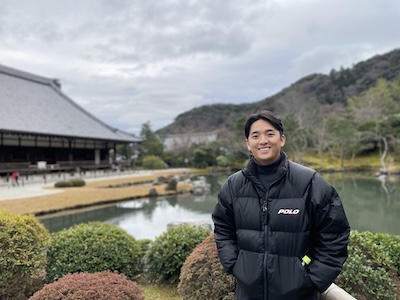
I grew up bilingual in Southern California, speaking only Japanese at home while attending American public school during the week and Japanese Saturday school on Saturdays. My father worked in Japan–US trading, so conversations about supply chains, global markets, and cultural nuance were just part of normal family life.
But I didn’t fully appreciate how unusual that upbringing was until much later. As my Japanese-American friends grew older, many gradually lost the language. They understood the culture, but could no longer function in Japan as Japanese.
Somehow, I stayed fully bilingual, not just linguistically, but culturally. I never felt fully “American” or fully “Japanese.” I lived in the in-between without realizing how valuable that perspective would become.
Years later, after studying and working in Japan, I began to see that this bicultural identity wasn’t simply part of my story. It was a strategic asset. Today, it shapes how I work with US startups and Japanese corporates, and more importantly, how we at Vertex build a repeatable platform for cross-border innovation.
Because cross-border partnerships rarely fail on technology.
They fail on misaligned expectations, incentives, and timelines.
Our job at Vertex is to systematise alignment.
Two Innovation Playbooks, One Opportunity
The US: Speed, Vision, and Momentum
In Silicon Valley, risk-taking is a badge of honour. People introduce themselves by what they’ve built, failed at, or plan to disrupt next. Investors are approachable, meetings happen quickly, and decisions move even faster.
The ecosystem rewards momentum. Communicating a bold vision can matter as much as product maturity.
That speed creates opportunity. But it also creates friction when US startups engage Japanese corporates, where confidence can be read as overconfidence and ambition can feel premature.
The US playbook is familiar:
- Move fast
- Iterate visibly
- Share boldly
- Build momentum
- Sell the story
Speed itself is treated as a competitive advantage.
Japan: Depth, Trust, and Long-Term Commitment
Japan operates differently. Excellence is expected, reliability is non-negotiable, and relationships are built slowly but with extraordinary depth.
I once worked on a Proof of Concept between a major construction company and a startup that took nearly a year to prepare before the pilot even began. Legal, procurement, safety, engineering, operations, and field teams all reviewed every detail.
Expectations and success metrics were aligned with precision.
Once the PoC launched, everything moved exactly as planned. Specialists provided structured feedback. Site visits and shared meals built trust. The project progressed through carefully designed phases.
This wasn’t slow decision-making. It was deliberate partnership building.
Because in Japan, once a company commits, they commit for the long term.
What Japanese executives consistently value is clear:
- Reliability
- Follow-through
- Long-term compatibility
- Partners who stay through challenges
- Trust built face-to-face
“Working together is not a transaction. It’s a relationship. Treat it like a marriage.”
That mindset defines Japanese partnership culture. Slow to start, but exceptionally strong once formed.
When These Worlds Collide
Because the US and Japan operate on fundamentally different assumptions, misunderstandings are inevitable.
US frustrations about Japan:
- Why is the NDA still under review?
- Why so many “what if” questions?
- Why is approval so slow?
- Why can’t we just try and adapt?
Japan’s frustrations about US startups:
- Why do they push so aggressively?
- Why oversell early-stage technology?
- Why are commitments vague?
- Why isn’t there more preparation?
I once approached a Japanese corporate through their US innovation team, assuming they had authority to initiate a PoC. They loved the solution. But the business unit in Japan had little interest and never signed off.
The deal stalled immediately.
That experience reinforced a critical lesson:
Japanese corporations do not move without internal alignment, and that alignment rarely happens in the meeting.
This is where nemawashi matters.
Nemawashi is the informal consensus-building process where real decisions are shaped before anything becomes official. By the time a meeting happens, the outcome has often already been decided.
At Vertex, we treat nemawashi not as etiquette, but as strategy.
Because knowing where alignment really happens is often the difference between momentum and months of silence.
From Personal Skill to Platform Capability
I often say my job is not to translate language, but to translate context.
Growing up between cultures trained me to read the room, interpret silence, adjust pacing, and recognize when enthusiasm needs to be balanced with clarity.
It taught me how to prevent overpromising, how to explain decision-making structures on both sides, and how to turn cross-cultural friction into progress.
But over time, I realized something important.
These skills can’t live only in one person’s head. To scale impact, they must be embedded into process, incentives, and networks.
That is what drew me to Vertex.
Vertex isn’t just capital.
It’s a value creation platform for cross-border innovation, designed to make alignment repeatable rather than accidental.
What I once did instinctively, Vertex now operationalizes:
- Expectation calibration between founders and corporates
- Decision-pacing management across cultures
- Stakeholder translation inside large Japanese organizations
- PoC design discipline that reduces downstream friction
- Trust compounding across our global portfolio and partner base
A partnership succeeds not when both sides agree, but when both sides understand. Our role is to make that understanding systematic.